Prepared computational modules and add-ons —from plug-and-play solvers to flexible nodes—with fast project integration.
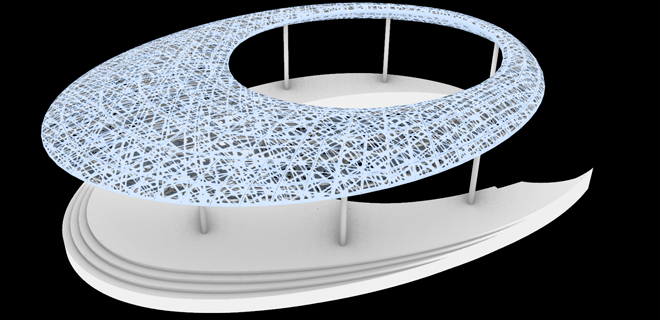
An open-ended approach to handle decorative patterns on exterior skins. Punctuations, attractor-based densities... literally any designer logic that makes a surface beautiful.
Surface -> panel division -> overarching pattern.
Mid-scale public covers, pavillions, etc.
Geometry-dependent, usually 2-day development per pattern logic.
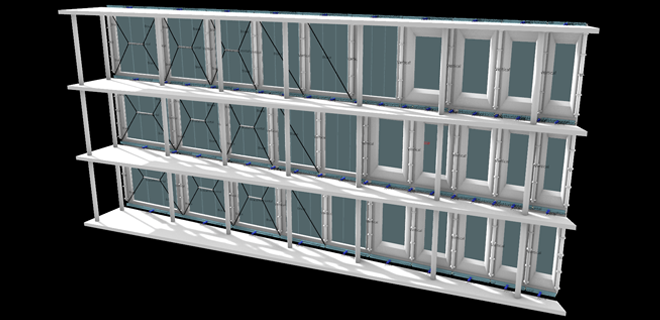
Predefined modules get grouped and distributed based on user-defined type constraints. (Simple example: the vertical level distance may define which type of modules can be used at a given facade segment.)
Surface -> panels with size and type constraints -> Division grid.
Conventional facades and unique cases.
Geometry-dependent, usually 2-day development per pattern logic.
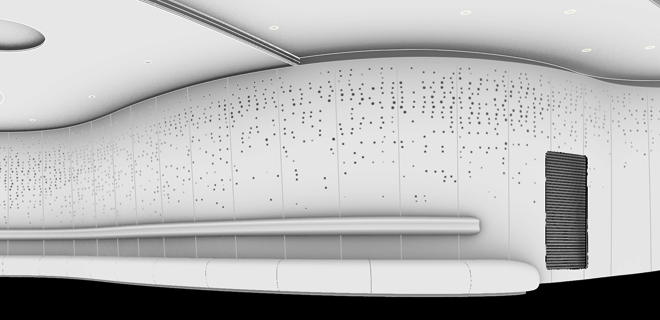
An open-ended approach to handle decorative patterns on interior skins. Punctuations, attractor-based density changes, etc. - literally any designer logic that makes a surface beautiful and relatable.
Surface -> panel division -> overarching pattern.
Interior claddings for spaces of fully conventional size.
Geometry-dependent, usually 2-day development per pattern logic.
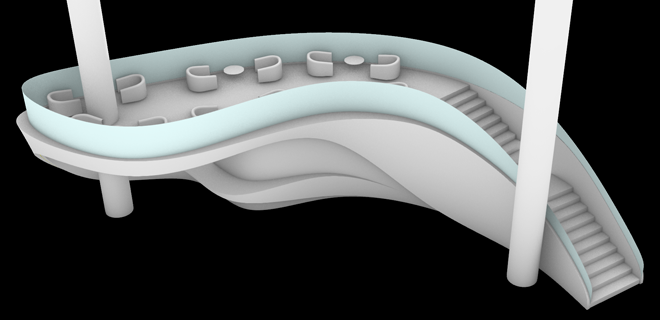
With years of experience in turning unique shapes into buildable forms, a set of Rhino SubD principles was developed. This approach can guide a form to its construction without any incoherent surface areas.
Design intent -> SubD shaping -> panelization.
Interior and exterior claddings, independent from type.
Can range from days to months-long coordination.
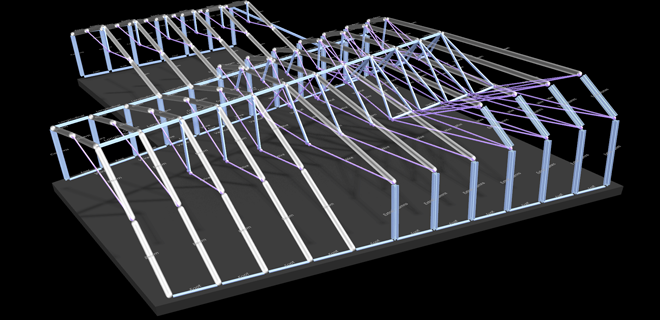
An intuitive, graph-driven logic for describing simple and complex roof structures by their axis network. It allows entire blocks of structural grids to fluidly adapt and recalculate whenever the building's outer boundaries change.
Design intent -> axis curves -> dynamic network.
Steel and timber roof structures.
Project-specific, ~3 day deployment.
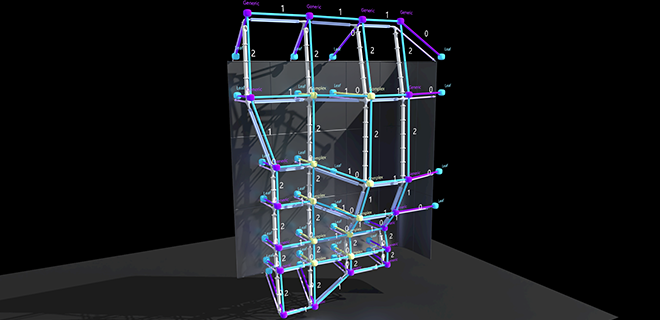
A group of scripts to generate secondary support axes and seamlessly merge them to the primary envelopes. This methodology solves that the structural framing breathes in perfect tandem with the paneling. The axis management approach covers the dynamic, conditional typing of nodes and edges. Quick example: the system can easily distinguish between perimeter anchoring axes and diagonal braces.
Design intent -> panelization -> grid setup -> dynamic network.
Surface background structures (interior and exterior).
Project-specific, ~3 day deployment.
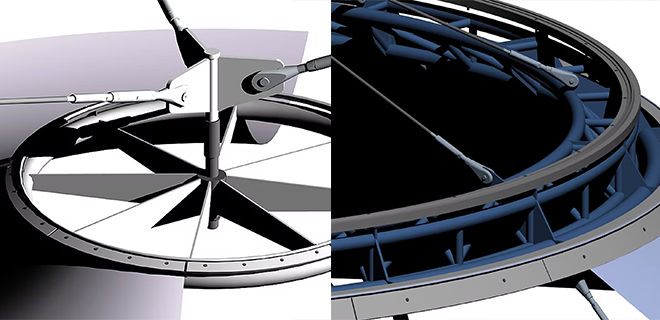
A specific detailing methodology for structural masts. Originating from my student research into tensile membrane structures, it turns geometric junctions into highly precise, fabrication-ready steel or timber models. Feel free to visit the reference website at: https://membranedetail. wixsite.com/home
Design intent -> mast model -> algorithm setup-> adaptive mast.
Structural tensile membranes.
Bespoke fabrication logic, 3-4 days of customization.
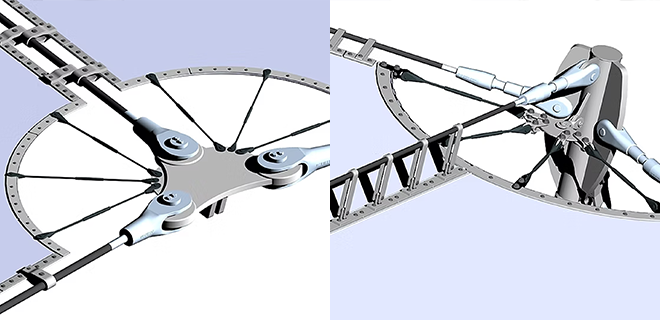
A specific detailing methodology for membrane corners. Originating from my student research into tensile membrane structures, it turns geometric junctions into highly precise, fabrication-ready steel or timber models. Feel free to visit the reference website at: https://membranedetail. wixsite.com/home
Design intent -> corner model -> algorithm setup -> adaptive corner.
Structural tensile membranes.
Bespoke fabrication logic, 3-4 days of customization.
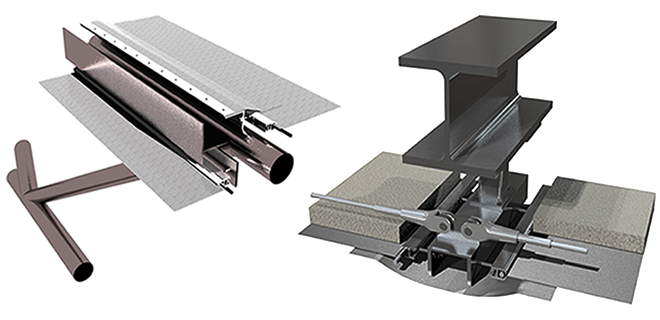
A specific detailing methodology for structural steel joints. Originating from my student research into tensile membrane structures, it turns geometric junctions into highly precise, fabrication-ready models. Feel free to visit the reference website at: https://membranedetail. wixsite.com/home
Design intent -> steel model -> algorithm setup -> adaptive joint.
Structural steel joints.
Bespoke fabrication logic, Revit Family or Rhino model customization.
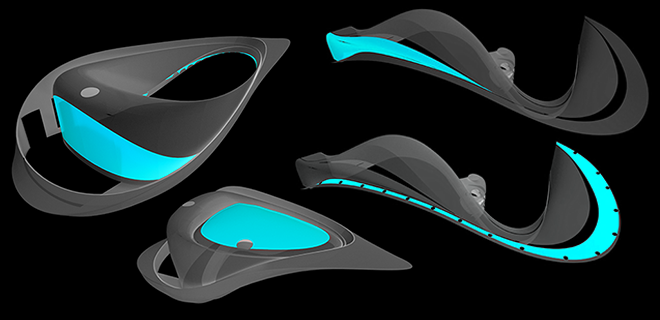
A lightweight, practical automation component in Rhino, designed to handle the heavy lifting of project documentation. It supports the seamless publishing of daunting amounts of PDF drawing views, freeing up your team's time for actual design work.
Layouts selected -> company indexing -> viewport camera setup -> exports.
For pre-existing Rhino layouts.
Fully prepared, instant plug-and-play.
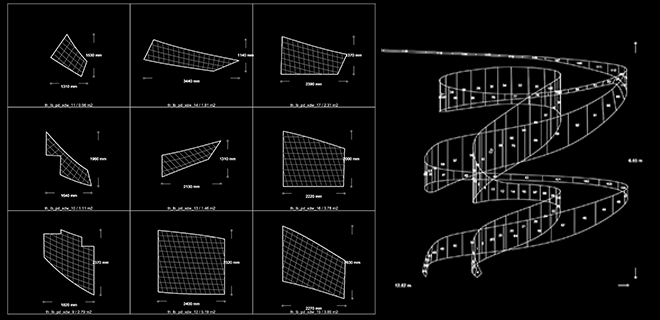
An intelligent grouping logic that brings order to mass customization. It automatically isolates individual fabrication panels, custom joints, or distinct building elements and organizes them onto clean, indexed drawing views.
Items selected -> grouping -> company indexing -> viewports created.
For pre-existing Rhino models.
Fully prepared, instant plug-and-play.
A robust connection pipeline built to guarantee data transfer between pure geometric Rhino and ArchiCad BIM environments. Having helped rewrite the core of the open-source TAPIR plugin (find on food4rhino.com!), I can ensure your conceptual Rhino models translate in real-time into Archicad. Moreover, ArchiCad Elements can be accessed from Rhino for highlighting, filtering and Attribute-extension, etc.
ArchiCad active -> Rhino active -> Two-way operations.
Update of non-visible ArchiCad elements and more.
Fully prepared, requires project-specific data mapping.

Bálint Füzes
MSc Architect & Software Developer
I’m Bálint Füzes, MSc Architect and certified software developer. I support architect and engineering teams with modeling and computation, focusing on the harmonious interplay of geometry and algorithms to deliver logically lightweight and construction-ready models.
Architect and civil engineering teams of all sizes, ideally with basic geometric understanding. Any geometric task — from simple to complex structures — is welcome. Joining a project gives you access to all modules and solvers.
I act as a flexible “back office.” On-demand, you get the capacity of a trained parametric team at fractional overhead — while keeping full project authority, authorship, and IP. Involvement adapts to the project phase for low-overhead integration.
Not at all. I handle all coding and solver logic. Your team simply uses ready-to-go tools, benefiting immediately from existing modules without worrying about the underlying technology.
Get a modeling partner.
Let's find the capability alignment for your next project.
balint@fuzesarch.com
+36302980503
 Get in touch